

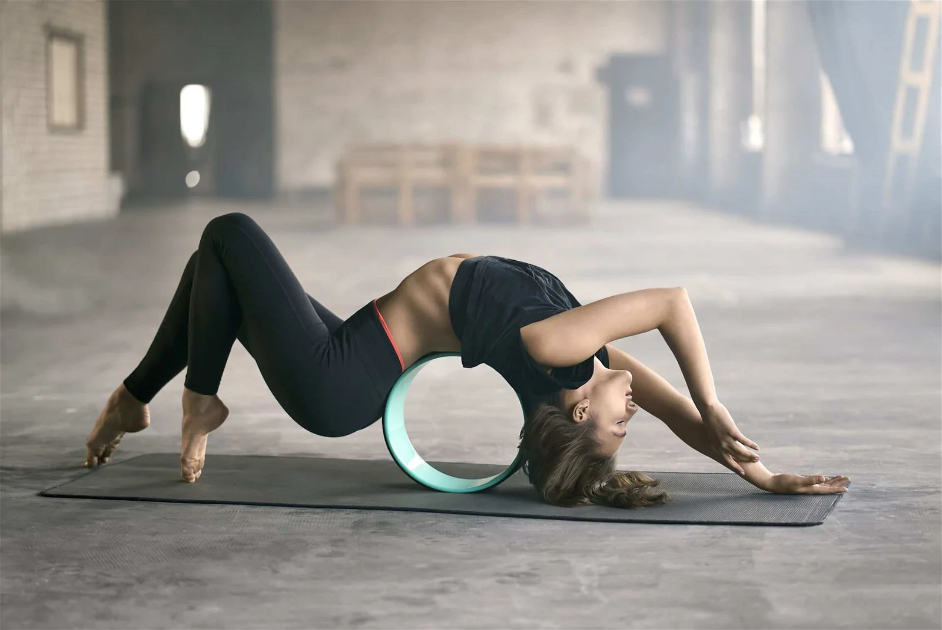
Corporate wellness events often aim to create energy, connection and a memorable break from routine. They can fail when the activity is either too passive to engage the room or so physically demanding that inexperienced employees feel exposed. A prop-based workshop can offer a middle path if it is designed around learnable skills rather than spectacular poses.
A yoga wheel workshop gives participants a shared object to explore through rolling, stabilising, supporting and controlled movement. The novelty attracts attention, while the skill structure gives the event purpose. Success depends on progression, choice and safety, not on asking everyone to complete the same backbend.
Novelty Is Useful Only When It Has Structure
An unfamiliar prop can reset expectations. Employees who believe they are “not yoga people” may approach the session with curiosity because it does not resemble a conventional class. Experienced practitioners also encounter a new coordination challenge.
Novelty alone wears off quickly. Participants need to understand what they are learning and how one task prepares for the next. A workshop can begin with controlling the wheel on the floor, progress to supported mobility and finish with an optional integrated movement.
This sequence creates a sense of accomplishment without requiring extreme flexibility. The memorable part becomes gaining control over the prop, not producing a photograph.
Skill-Based Design Reduces Comparison
Workplaces already contain hierarchies and performance pressure. A class that praises the deepest pose can reproduce those dynamics. Employees may compete, hide discomfort or avoid participation because colleagues are watching.
Skills provide more varied definitions of success. One person may stabilise the wheel confidently. Another may find a comfortable support position. A third may choose a standing variation instead of kneeling. Each outcome can be valid.
Instructors should describe levels as options rather than ranks. Avoid naming them beginner, advanced or expert during a one-off corporate event. Participants need permission to remain with the first task while others explore another variation.
Choose Skills That Fit a Mixed Group
Prop Handling
Participants learn how the wheel rolls, how much pressure changes its speed and how to stop it. This low-risk exploration establishes respect for the moving surface.
Controlled Reach
From seated or kneeling, the hands roll the wheel forwards through a manageable distance and return. The objective is to coordinate the arms and trunk, not reach the floor.
Supported Upper-Back Mobility
The wheel can provide contact behind the upper back while the participant remains upright or reclines only slightly. Head and neck support options should be clear.
Standing Support
The wheel may be used against a wall or held securely for a small shoulder movement. This offers an alternative for employees who do not wish to kneel or sit on the floor.
Partner Observation Without Touch
Participants can work in pairs to notice whether the wheel stays on a straight path or whether the base remains stable. Partners should not push, pull or diagnose each other.
A Corporate Workshop Needs Different Planning from a Studio Class
The organiser may not know participants’ injuries, movement experience or comfort with floor work. Registration should explain the activity, clothing needs and availability of alternatives. Attendance must be voluntary.
The room needs sufficient spacing because wheels can roll beyond individual mats. Furniture, bags, cables and refreshments should be removed from the practice area. A smooth but non-slippery floor with suitable mats is important.
Wheel size and condition must be checked. Props should have intact surfaces and an appropriate weight rating. Sharing can work for demonstration stations, but a session with one wheel per participant allows better pacing and reduces waiting.
Design the Workshop Arc
Welcome and Safety Brief
Explain that the wheel moves, that smaller ranges are encouraged and that participants may stop at any time. Demonstrate how to place the prop on its side so it does not roll unattended.
Ten Minutes of Familiarisation
Use seated or kneeling hand rolls, short pauses and controlled returns. Include a standing option. This period teaches braking before body weight is placed against the wheel.
Twenty Minutes of Progressive Skills
Introduce two or three movement families, such as a supported upper-back position, a kneeling rollout and a lunge with elevated hands. Each family should have a stable alternative using the wall or fixed blocks.
Ten Minutes of Individual Choice
Participants select one skill to repeat and refine. The instructor circulates, gives verbal feedback and helps adjust setup. This reinforces autonomy.
Closing Reset
Finish with simple movement without the wheel, then invite brief reflection on what became easier. Employees should leave alert enough to commute or return to work.
Facilitation Matters More Than Entertainment
A charismatic instructor can create energy, but the event still needs precise cueing. Participants should know where to place the hands, what prevents rolling and how to exit.
Humour must never target flexibility, age, body shape or fear. Corporate groups may include colleagues who do not know each other well and employees who feel unable to decline publicly. Respectful language protects psychological safety.
Hands-on adjustments should be limited and consent-based. In many corporate settings, verbal instruction and demonstration are more appropriate. A photographer should not enter the movement space without prior consent.
Make Team Connection Genuine
The wheel can support collaboration without turning the workshop into a competition. Small groups might identify three safety checks, compare how moving the wheel closer changes control or help ensure props are parked safely.
Avoid relay races, maximum-depth challenges and timed balance contests. These reward risk-taking and may exclude people with medical or mobility concerns.
A useful closing discussion can connect prop control with workplace learning: changing one variable at a time, noticing when effort rises and asking for support before control is lost. The analogy should remain light and should not turn the class into a leadership lecture.
Measure Event Quality Responsibly
Attendance and photographs do not reveal whether the workshop was inclusive. Anonymous feedback can ask whether instructions were clear, alternatives felt genuine and the pace allowed participants to make decisions.
Organisers can also note practical issues such as room size, equipment availability and transition time. Medical details and individual performance should not be collected for event reporting.
The workshop should not claim to eliminate workplace stress or replace regular physical activity. It is an opportunity for movement, skill learning and social engagement within a wider wellness programme.
Work with an Experienced Provider
Prop-based teaching requires instructors who can manage equipment, mixed abilities and safe progression. They need enough time to orient participants rather than rushing towards promotional poses.
Working with Yoga Edition can give Singapore organisations access to instructors familiar with wheel-specific movement and studio-quality equipment. The employer should still provide accurate attendance estimates, accessibility information, suitable space and protected time.
A site review may be necessary for large groups. Dividing participants into smaller sessions often produces better instruction and less equipment congestion than placing everyone in one crowded room.
What Employees Should Take Away
The best outcome is a clearer understanding of how to learn a physical skill: establish support, test a small range, pause, and progress only while control remains available. This process is relevant regardless of whether someone continues wheel practice.
The event can be memorable without being extreme. A participant who learns to manage a rolling prop confidently has achieved something concrete.
Conclusion
Skill-based workshops work because they combine novelty with progression. The wheel gives employees a shared challenge, while layered tasks prevent the activity from depending on flexibility or previous yoga experience.
With voluntary participation, adequate space and precise facilitation, a corporate event can feel engaging without becoming competitive. The focus stays on curiosity, control and safe learning.
Frequently Asked Questions
How long should a corporate wheel workshop last?
Forty-five to sixty minutes allows time for orientation, progressive skills and a controlled finish. Larger or inexperienced groups may benefit from a longer setup period.
Does every participant need an individual wheel?
One wheel per person supports smoother pacing. Station-based sharing can work for smaller groups if props are cleaned and participants are not rushed.
What clothing should employees wear?
Comfortable clothing that permits reaching, kneeling and stepping is suitable. Avoid loose accessories that may catch beneath the wheel.
Can the workshop be conducted without floor work?
Yes. Standing and wall-supported skills can form a substantial session. The organiser should communicate accessibility needs before the event.
Should managers participate with their teams?
They can participate, but they should model choice rather than pressure employees. Attendance and movement options must remain voluntary.
Is the workshop suitable as a team competition?
Competition is not recommended. Depth and speed challenges can encourage risk-taking. Collaborative observation and skill refinement are safer ways to create interaction.